

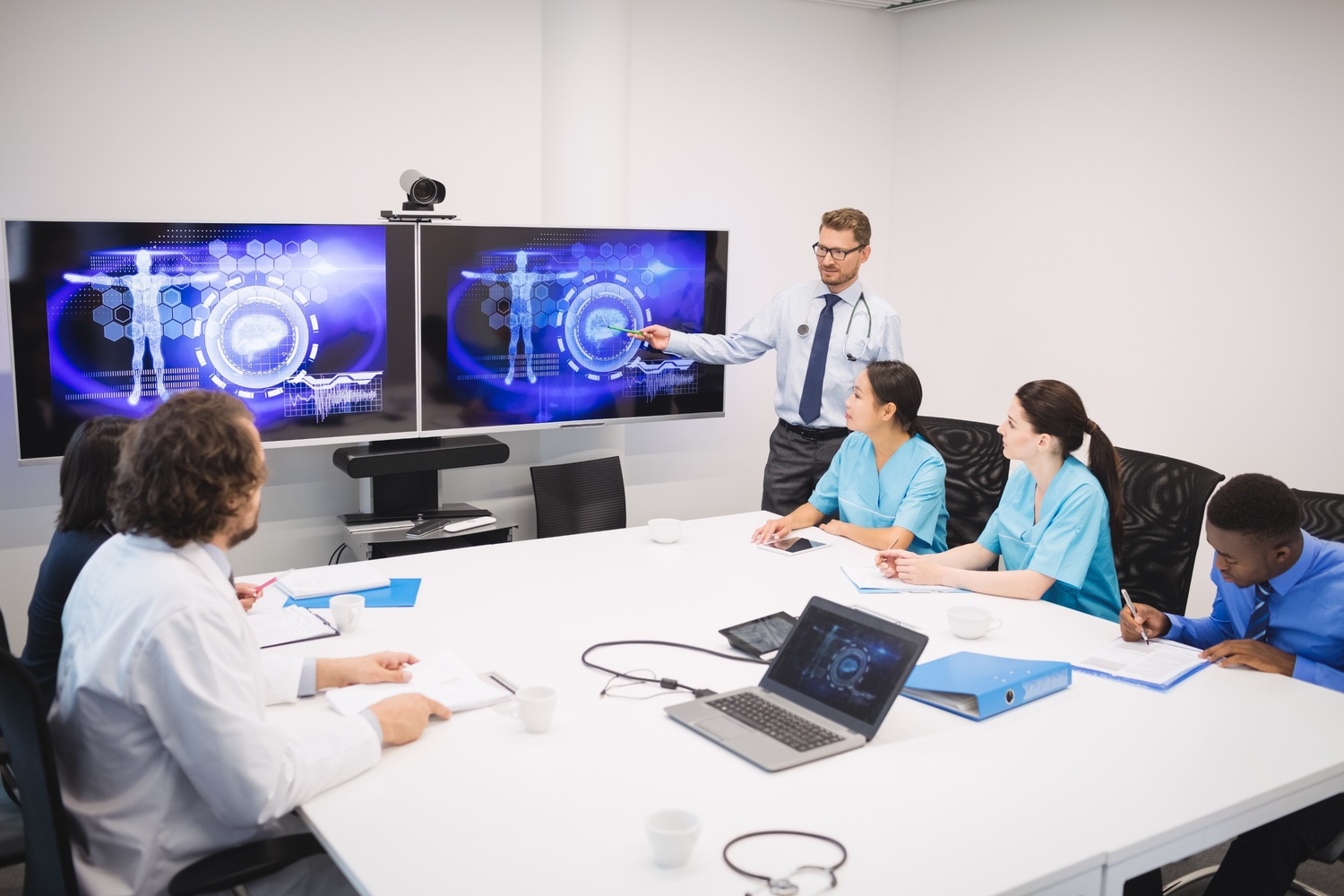
In the public imagination, healthcare is often reduced to a familiar hierarchy: physicians at the top, nurses at the bedside, patients moving between them. Yet this picture omits a much larger and more complex reality. Modern healthcare functions because of a broad ecosystem of professionals collectively known as med allied, or allied health. These practitioners operate across diagnostics, therapy, rehabilitation, prevention, and health support services, forming the connective tissue that allows medical care to actually work.
Within the first moments of a patient encounter, med allied professionals are already present. Laboratory scientists process blood samples that confirm or rule out disease. Imaging specialists generate scans that guide diagnosis. Therapists evaluate mobility, speech, or breathing long before recovery is visible. Dietitians and technologists translate clinical decisions into daily routines patients can follow. In practical terms, med allied professionals turn medical intent into lived care.
Despite their central role, med allied careers are often poorly understood outside professional circles. The term itself can feel vague, even bureaucratic, masking the human skill and scientific rigor behind it. Yet these professions represent the majority of the healthcare workforce in many systems, touching nearly every patient at some point in their care journey.
Understanding med allied is not simply about cataloguing job titles. It is about recognizing how healthcare has evolved into a collaborative enterprise, one that depends on specialized knowledge, precision, and sustained patient interaction. As populations age, chronic disease rises, and technology reshapes medicine, the importance of med allied professionals is no longer peripheral. It is fundamental.
What “Med Allied” Really Means
At its core, med allied refers to healthcare professions that are neither physicians nor nurses, yet are trained, credentialed, and essential to patient care. The phrase “allied” reflects partnership rather than hierarchy. These professionals work alongside doctors and nurses, contributing distinct expertise that complements medical and nursing practice.
Med allied roles span an unusually wide range. Some are highly technical, such as medical laboratory scientists, radiologic technologists, and diagnostic sonographers. Others are therapeutic and relational, including physical therapists, occupational therapists, speech-language pathologists, and respiratory therapists. Still others focus on nutrition, health information, rehabilitation, and preventive care.
What unites these roles is not a single task, but a shared purpose: enabling accurate diagnosis, effective treatment, and meaningful recovery. Med allied professionals often spend more sustained time with patients than physicians do, guiding them through procedures, exercises, education, and long-term management. In this sense, they are both clinicians and translators, bridging medical science and everyday life.
The Scope and Scale of the Med Allied Workforce
One of the most striking features of med allied is its size. In many healthcare systems, allied health professionals make up more than half of the total workforce. Hospitals, clinics, diagnostic centers, rehabilitation facilities, and community health programs all rely on them to function.
This scale is partly due to specialization. As medicine has become more complex, tasks once performed by generalists have shifted to specialists with focused training. Imaging, laboratory analysis, respiratory support, rehabilitation, and nutrition have each become sophisticated disciplines in their own right. Med allied professionals are trained specifically for these domains, allowing physicians to focus on diagnosis and treatment planning while ensuring precision and safety in execution.
The reach of med allied also extends beyond hospitals. Community health settings, schools, long-term care facilities, home health services, and telehealth platforms all depend on allied professionals. In rural or underserved areas, they are often the most consistent point of healthcare access, providing continuity where physician availability may be limited.
A Brief History of Allied Health’s Emergence
The concept of allied health did not emerge overnight. In the early twentieth century, healthcare roles were fewer and less differentiated. As scientific advances accelerated, particularly after World War II, new technologies and treatment modalities created the need for specialized operators and practitioners.
Laboratory diagnostics expanded rapidly, requiring trained personnel to manage increasingly complex tests. Imaging technologies evolved from simple X-rays to advanced modalities, demanding technical and anatomical expertise. Rehabilitation medicine grew in response to injuries, chronic disease, and longer life expectancy, giving rise to physical, occupational, and speech therapy as recognized professions.
Initially, these roles were often defined in relation to physicians, seen as auxiliary or supportive. Over time, education standards, licensure requirements, and professional bodies formalized med allied careers as distinct disciplines. Today, they are recognized not merely as support roles, but as autonomous professions with their own bodies of knowledge and ethical standards.
The Daily Reality of Med Allied Practice
A day in the life of a med allied professional is rarely predictable. In a hospital laboratory, a technologist may begin by calibrating equipment, reviewing quality controls, and processing a steady flow of specimens. Each test result carries weight, informing diagnoses that can alter a patient’s life.
In rehabilitation settings, therapists work face-to-face with patients, assessing functional limitations and designing individualized plans. Progress may be slow and emotionally charged. A few regained steps, a clearer word spoken, or a deeper breath can mark significant milestones. These moments require patience, technical skill, and empathy in equal measure.
Imaging and diagnostic professionals operate at the intersection of technology and care. They must ensure patient safety, obtain accurate results, and often deliver reassurance during intimidating procedures. Dietitians translate clinical goals into practical nutrition strategies, navigating cultural preferences, economic constraints, and behavioral change.
Across these roles, documentation, collaboration, and communication are constant. Med allied professionals participate in multidisciplinary teams, contributing insights that shape treatment decisions. Their work is both deeply human and rigorously scientific.
Education and Training Pathways
One defining characteristic of med allied careers is the diversity of educational pathways. Unlike medicine, which follows a relatively standardized trajectory, allied health training varies by profession, region, and scope of practice.
Some roles require certificate or associate-level education, emphasizing practical skills and rapid workforce entry. Others demand bachelor’s, master’s, or even doctoral degrees, particularly in therapy and advanced diagnostic fields. Clinical placements are a common feature, ensuring graduates gain hands-on experience before independent practice.
Licensure and certification play a critical role in maintaining standards. Many med allied professionals must pass national or regional examinations and engage in continuing education to remain current. This commitment to lifelong learning reflects the pace of technological and scientific change within healthcare.
Collaboration at the Heart of Care
Healthcare today is fundamentally collaborative, and med allied professionals are central to that collaboration. Treatment plans are rarely the product of a single decision-maker. Instead, they emerge from dialogue among physicians, nurses, therapists, technologists, and support staff.
A patient recovering from a stroke, for example, may rely on neurologists for diagnosis, nurses for monitoring, physical therapists for mobility, speech therapists for communication, dietitians for safe swallowing, and social workers for discharge planning. Med allied professionals connect these pieces, ensuring care is coherent rather than fragmented.
This teamwork requires communication skills as much as clinical expertise. Med allied practitioners often serve as advocates, identifying barriers to recovery and suggesting practical adjustments. Their proximity to patients positions them uniquely to observe subtle changes that can influence outcomes.
Challenges Facing the Med Allied Workforce
Despite their importance, med allied professionals face persistent challenges. Workforce shortages are common, driven by rising demand, aging populations, and limited training capacity. Burnout is an increasing concern, particularly in high-intensity settings where caseloads are heavy and resources constrained.
Recognition and visibility also remain uneven. Public narratives about healthcare frequently overlook allied roles, reinforcing misconceptions about their scope and expertise. This lack of visibility can affect funding, policy attention, and career interest among prospective students.
Additionally, rapid technological change demands continual adaptation. While innovation can enhance care, it also requires investment in training and infrastructure. Ensuring that med allied professionals are equipped to use new tools effectively is an ongoing challenge for healthcare systems.
Technology and the Future of Med Allied
Looking forward, technology is reshaping med allie’d practice in profound ways. Telehealth has expanded access to rehabilitation, nutrition counseling, and diagnostic consultation. Digital records and data analytics are enhancing coordination and quality assurance. Emerging tools powered by artificial intelligence are assisting with image analysis, workflow optimization, and predictive care planning.
Rather than replacing med allie’d professionals, these technologies are likely to amplify their impact. Human judgment, empathy, and contextual understanding remain irreplaceable, particularly in therapy and patient education. The future of med allie’d lies in integrating technological efficiency with human-centered care.
Education and policy will play decisive roles in this transition. Interprofessional training, flexible career pathways, and investment in allied health research can strengthen the workforce. As healthcare shifts toward prevention and community-based models, med allie’d professionals will be increasingly visible at the front lines.
Conclusion
Med allied professionals are the quiet architects of modern healthcare. Their work bridges diagnosis and recovery, science and daily life, technology and compassion. Without them, medical decisions would remain abstract, unimplemented, and incomplete.
As healthcare systems confront growing complexity, the value of med allie’d professions becomes ever clearer. Recognizing their contributions is not merely a matter of professional respect; it is a prerequisite for resilient, effective care. In understanding med allie’d, we gain a fuller picture of how health is truly delivered — not by individuals in isolation, but by collaborative networks dedicated to healing.
Frequently Asked Questions
What does “med allied” mean in healthcare?
Med allied refers to healthcare professionals who are not doctors or nurses but provide essential diagnostic, therapeutic, rehabilitative, and preventive services.
Are med allied professionals licensed?
Most med allied roles require formal education, certification, or licensure, depending on the profession and regional regulations.
Where do med allied professionals work?
They work in hospitals, clinics, laboratories, rehabilitation centers, community health settings, and increasingly through telehealth services.
Is med allied a good career path?
Med allied careers often offer strong job demand, diverse roles, and meaningful patient interaction, with varied education pathways.
How do med allied professionals support doctors?
They provide specialized expertise, perform diagnostic and therapeutic services, and contribute critical information that informs medical decision-making.