

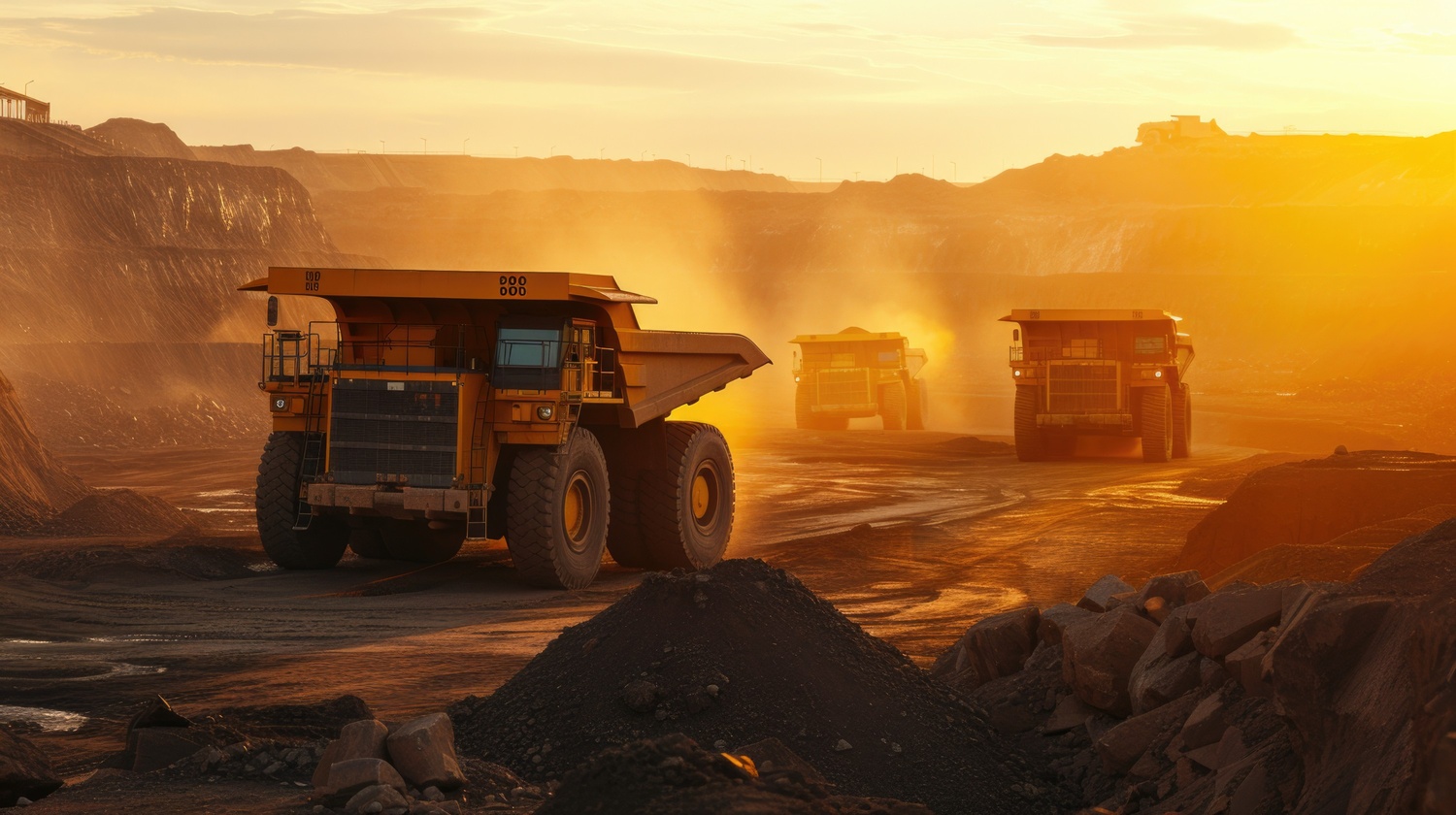
Snyder Associated Companies does not announce itself with glossy campaigns or headline-grabbing valuations. Its name rarely circulates beyond industry circles or western Pennsylvania. Yet for more than eighty years, the company has functioned as a steady industrial presence—quietly extracting minerals, producing energy, manufacturing materials, and reinvesting profits into land, finance, and agriculture.
Founded in 1941 in Kittanning, Pennsylvania, Snyder Associated Companies grew out of necessity rather than ambition. What began as a small excavation business evolved, step by deliberate step, into a diversified holding company operating across mining, oil and gas, manufacturing, agriculture, real estate, and financial investments. The firm’s history mirrors the arc of American industrial capitalism: postwar expansion, resource dependence, regulatory pressure, and strategic diversification.
Within the first century of its existence, Snyder Associated Companies avoided two common fates of family businesses—collapse through succession disputes or stagnation through over-attachment to a single industry. Instead, it pursued a model rooted in reinvestment, operational pragmatism, and geographic discipline. Its operations remain largely concentrated in western Pennsylvania, even as select business units operate globally.
This is not a story of disruption or sudden transformation. It is a story of accumulation—of assets, expertise, and institutional memory. Snyder Associated Companies represents a form of American business increasingly rare: privately held, regionally anchored, family-led, and built to endure rather than to exit.
The Beginnings: Excavation, Adaptation, and War-Era America
The origins of Snyder Associated Companies trace back to June 1941, when brothers Charles H. “Chuck” Snyder Sr. and Elmer A. Snyder founded C.H. & E.A. Snyder Excavating. The enterprise was modest, anchored by a single shovel and a handful of local civil construction projects.
The timing proved consequential. As World War II reshaped the American economy, federal infrastructure spending shifted, and traditional excavation work became less reliable. Faced with idle equipment and labor, the Snyder brothers adapted. They moved into surface coal mining—an industry that aligned with wartime demand and regional geology.
This pivot was not merely opportunistic; it became foundational. By the mid-1940s, mining overtook excavation as the company’s core activity. The shift demonstrated an early pattern that would define the company for decades: operational flexibility guided by local knowledge and asset utilization.
In 1948, the acquisition of Glacial Sand & Gravel Company marked the first major expansion beyond coal. It also signaled the company’s emerging philosophy—growth through ownership of physical assets that supported construction, infrastructure, and industrial production.
Building a Mineral and Materials Empire
The 1950s solidified Snyder’s identity as a mineral-based enterprise. The formation of Allegheny Mineral Corporation in 1953 allowed the company to quarry limestone, expanding its footprint across western Pennsylvania. Limestone and aggregate operations provided essential materials for highways, commercial buildings, and municipal infrastructure.
Unlike speculative mining ventures, Snyder’s mineral operations were pragmatic and demand-driven. The company focused on supplying regional markets rather than chasing distant expansion. This geographic discipline reduced logistical risk and reinforced long-term customer relationships.
By the 1960s and early 1970s, the company operated multiple mining and quarry sites, each feeding into a growing ecosystem of downstream uses. These operations laid the groundwork for later vertical integration into manufacturing.
The Holding Company Takes Shape
As the portfolio expanded, complexity increased. By the mid-1970s, the Snyder family recognized that a consolidated structure was necessary to manage a growing web of subsidiaries. In 1975, Snyder Associated Companies, Inc. was formally established as a holding company.
This reorganization was more than administrative. It represented a strategic shift—from operating a single industrial business to stewarding a diversified portfolio. Under the holding company model, individual subsidiaries retained operational autonomy while benefiting from centralized capital allocation and governance.
The holding structure also facilitated generational transition, allowing leadership roles to be distributed across family members and professional managers without fragmenting ownership.
Energy Beyond Coal: Oil and Natural Gas
As coal markets matured and regulatory pressures intensified, Snyder Associated Companies expanded into oil and natural gas exploration and production. Western Pennsylvania’s geology offered opportunities in conventional and later unconventional gas formations.
Rather than abandoning coal entirely, the company layered energy assets on top of its existing resource base. This approach reflected a broader understanding of energy cycles—recognizing that no single fuel source would remain dominant indefinitely.
The company’s oil and gas activities remained regionally focused, leveraging decades of land ownership, mineral rights expertise, and regulatory familiarity. Participation in energy services and investment holdings further diversified exposure within the sector.
Manufacturing and Value-Added Production
Snyder Associated Companies did not limit itself to extraction. Over time, it developed manufacturing operations that converted raw materials into finished or semi-finished products, particularly in cement and concrete.
This move toward value-added production reduced reliance on commodity pricing and strengthened margins. It also positioned the company closer to end users in construction and infrastructure, providing stability during downturns in extraction markets.
Manufacturing operations reflected a broader philosophy: resources should not simply be sold—they should be transformed.
Agriculture, Biology, and an Unexpected Global Reach
One of the most distinctive chapters in the company’s evolution was its entry into agricultural and biological products. Unlike mining or construction materials, these operations addressed global niche markets rather than regional demand.
Through facilities and partnerships in North America, Europe, South Africa, and Australia, this segment introduced international exposure into an otherwise regionally anchored company. It also demonstrated a willingness to invest in industries that bore little resemblance to coal or concrete.
This diversification was not cosmetic. Agricultural and biological products offered counter-cyclical stability and access to innovation-driven markets less vulnerable to domestic industrial slowdowns.
Real Estate and Financial Capital
Land has always been central to Snyder Associated Companies—first as a site for extraction, later as an investment class. Over decades, the company accumulated real estate holdings that included industrial properties, commercial land, and undeveloped acreage.
In parallel, the company invested in financial assets, including significant interests in banking institutions. These investments provided liquidity, yield, and insulation from industrial volatility.
Together, real estate and financial holdings transformed Snyder Associated Companies from an industrial operator into a diversified capital steward.
Family Governance and Continuity
Perhaps the company’s most notable achievement is not operational but organizational: continuity. Leadership passed from the founding generation to successors without fracturing ownership or strategy.
Charles H. Snyder Jr. and other second-generation leaders reinforced a governance culture that balanced family involvement with professional management. Decision-making emphasized patience, reinvestment, and long-term solvency.
This structure allowed the company to avoid the common pitfalls of family enterprises—over-centralization, emotional decision-making, or resistance to change.
Operating Through Regulation and Transition
Across mining, energy, and manufacturing, Snyder Associated Companies navigated tightening environmental regulations and shifting public expectations. Compliance required capital investment, operational discipline, and adaptation.
Rather than resisting regulation, the company treated it as a cost of endurance. Environmental standards, safety requirements, and reporting obligations became embedded into operational planning.
This regulatory fluency proved essential as energy markets evolved and sustainability considerations gained prominence.
A Regional Anchor with National Implications
Though privately held and understated, Snyder Associated Companies functions as an economic anchor in Armstrong County and surrounding regions. Its operations support skilled labor, specialized trades, and local supply chains.
Recognition from academic and business institutions underscored its role as a model of family enterprise longevity—one that contributes to regional stability without seeking national attention.
Conclusion
Snyder Associated Companies is not a story of disruption or rapid scaling. It is a story of endurance—of a family enterprise that adapted to economic cycles, diversified thoughtfully, and resisted the temptation to trade longevity for visibility.
From excavation to mining, from energy to agriculture, the company’s evolution reflects a disciplined understanding of assets, risk, and time. In an era when many businesses are built to be sold, Snyder Associated Companies remains built to last.
Its legacy is not defined by headlines but by continuity: eight decades of measured growth, quiet reinvestment, and sustained relevance in the American industrial landscape.
FAQs
What is Snyder Associated Companies?
It is a privately held, family-owned holding company with operations in mining, energy, manufacturing, agriculture, real estate, and financial investments.
When was the company founded?
The business traces its origins to 1941, beginning as an excavation firm in Pennsylvania.
Is Snyder Associated Companies publicly traded?
No. The company remains privately owned by the Snyder family.
Where does the company operate?
Its core operations are based in western Pennsylvania, with select agricultural and biological businesses operating internationally.
Why is the company considered diversified?
It spans multiple industries—natural resources, manufacturing, energy, agriculture, real estate, and finance—reducing reliance on any single market.