

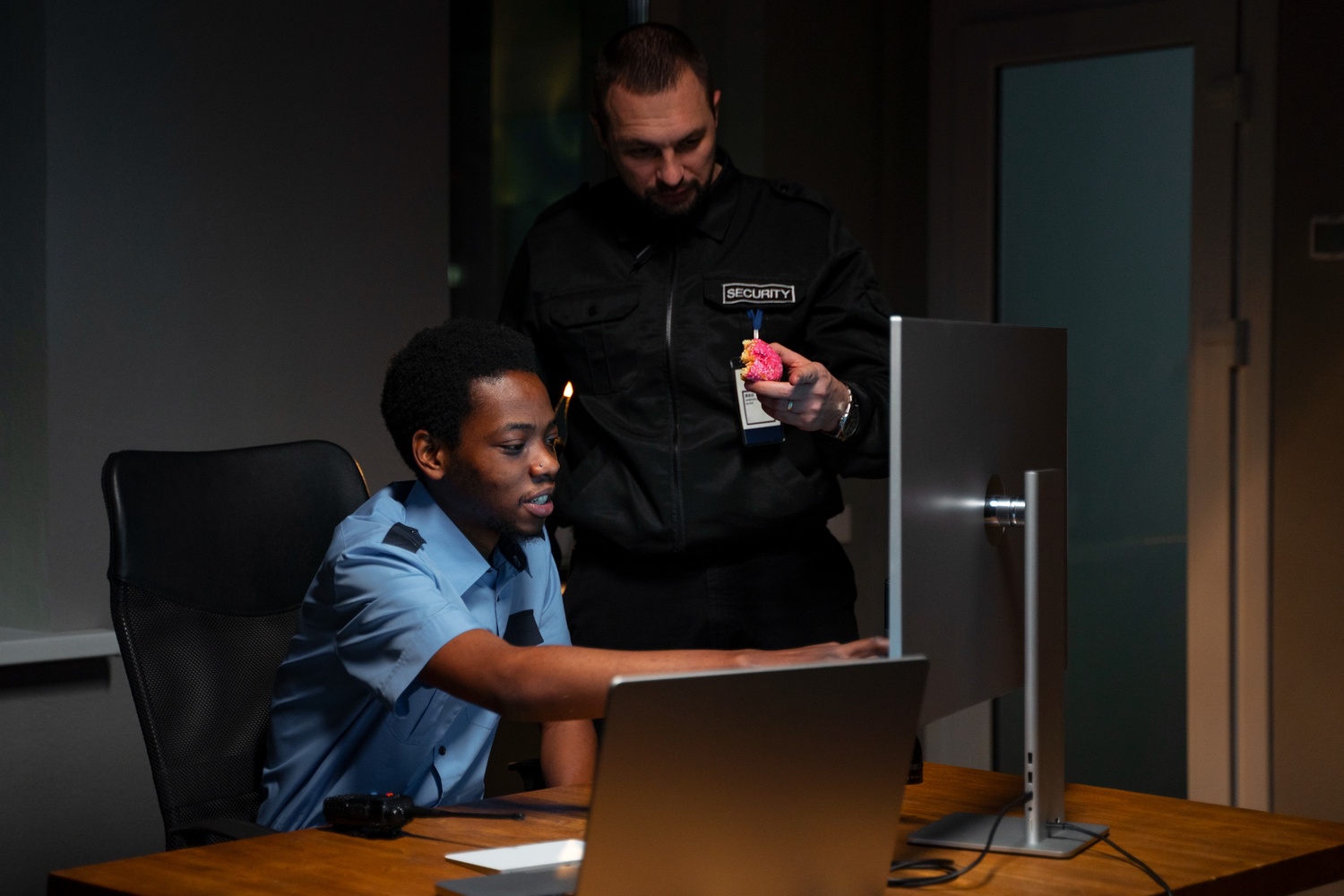
Private security rarely commands the public imagination. Its presence is often peripheral—a uniform at a school entrance, a patrol vehicle circling a construction site, a dispatcher’s calm voice on a late-night call. Yet this industry, largely invisible until something goes wrong, has become an essential layer of American safety infrastructure. Kates Security Services, a Chicago-based firm founded at the turn of the millennium, offers a revealing case study in how private security has evolved, professionalized and expanded in response to modern anxieties.
For readers searching to understand what Kates Security is and what it does, the answer is straightforward: the company provides contract security officers, specialized training programs, dispatch coordination and technology-assisted surveillance for a wide range of clients. Schools, businesses, construction firms and event organizers increasingly rely on companies like Kates to supplement public safety resources and manage risk in environments that feel more unpredictable than ever.
But behind that simple description lies a more complex story. Kates operates in a crowded and often misunderstood sector—one shaped by public fear, liability concerns, technological change and ongoing debates about accountability. Its growth mirrors a national trend toward outsourcing safety functions once assumed to be the exclusive domain of public institutions.
This article examines Kates Security not as an isolated business success or failure, but as a lens into the broader private security ecosystem. By exploring its services, training philosophy, use of technology and community-facing initiatives, we gain insight into how private security firms position themselves in a society that demands safety while questioning who should provide it—and under what oversight.
The Roots of a Private Security Firm
Kates Security Services was founded in Chicago in 2000, at a time when private security was already a growing industry but had not yet reached its current scale or complexity. The firm emerged in a city shaped by dense urban development, large public institutions and persistent concerns about crime and workplace safety. Chicago’s environment—commercial, industrial and residential—created steady demand for private security services tailored to diverse settings.
From its earliest years, Kates positioned itself as more than a guard-for-hire operation. Its branding emphasized professionalism, preparedness and adaptability, signaling an intent to compete not just on price but on perceived quality. As national conversations around security shifted—particularly after high-profile incidents of violence in schools, workplaces and public spaces—the company expanded its offerings accordingly.
Over time, Kates grew into a mid-sized firm employing a significant workforce and servicing a broad client base. While it does not carry the name recognition of national security conglomerates, its longevity speaks to an ability to meet market demand and navigate an industry known for high turnover and intense competition.
What Kates Security Provides
At its core, Kates Security offers contract security services. These include uniformed officers assigned to fixed posts, mobile patrols and site-specific coverage tailored to client needs. Such services remain the backbone of private security, providing deterrence, monitoring and incident reporting in locations where clients want a visible safety presence.
Beyond traditional guard services, the company emphasizes specialization. Its portfolio includes event security, construction site protection and security for educational institutions—each environment presenting distinct risks and expectations. A school setting demands a different posture and communication style than an industrial site, and firms that fail to recognize these differences often struggle to retain clients.
Kates also highlights its dispatch and coordination capabilities. A centralized dispatch center allows the company to track officer locations, respond to incidents and maintain constant communication with personnel in the field. For clients, this infrastructure represents accountability: proof that someone is always watching, listening and ready to respond.
Training as a Competitive Advantage
Training sits at the center of Kates Security’s identity. The company operates its own academy, offering programs that range from basic security instruction to advanced courses focused on executive protection, anti-terrorism awareness and active-shooter preparedness.
This emphasis reflects a broader shift in private security expectations. Clients increasingly want officers who can do more than observe and report. They want personnel trained to assess risk, de-escalate conflict and respond effectively in emergencies. Training becomes not only a safety measure but a selling point—an assurance that officers are prepared for scenarios that once seemed unthinkable.
The academy’s curriculum underscores sensory awareness, situational judgment and communication skills. These elements aim to elevate security work from a passive role to an active form of risk management. In a competitive market, such framing helps differentiate one firm from another, even when services appear similar on paper.
Yet training in private security remains largely self-regulated. Unlike public law enforcement academies, private firms design their own programs within broad legal requirements. This autonomy allows flexibility but also leads to uneven standards across the industry, raising questions about consistency and oversight.
Technology and the Changing Face of Surveillance
Technology has reshaped nearly every aspect of security work, and Kates is no exception. Among its more modern offerings is the use of drone technology for surveillance and reconnaissance. Drones allow security teams to monitor large or hard-to-access areas quickly, supplementing fixed cameras and on-foot patrols.
For clients, such tools promise efficiency and enhanced visibility. A single drone can survey a construction site perimeter or assess a situation without placing personnel in immediate danger. In marketing materials, this capability signals innovation and forward thinking.
However, technology introduces new complexities. Drone operations require specialized training and compliance with aviation regulations. They also raise privacy concerns, particularly in urban environments where surveillance may capture more than intended. Private security firms must navigate these issues carefully to avoid legal challenges and public backlash.
Dispatch systems, geofencing and digital reporting platforms further illustrate how security work has become increasingly data-driven. Incidents are logged, movements tracked and responses analyzed—turning safety into something that can be measured, audited and sold as a service.
The Dispatch Center: An Invisible Backbone
While uniformed officers are the visible face of Kates Security, the dispatch center functions as its operational backbone. Operating around the clock, dispatchers coordinate responses, maintain communication with officers and serve as the first point of contact during incidents.
In practice, dispatch centers act as both logistical hubs and decision-making spaces. Operators must interpret information quickly, prioritize calls and guide field personnel under pressure. For clients, the existence of a dedicated dispatch center offers reassurance that security coverage extends beyond the individual officer on site.
The effectiveness of such centers depends on staffing, training and technological infrastructure. In a mid-sized firm, maintaining this capability represents a significant investment, one that must be balanced against cost pressures and competitive pricing.
Community Outreach and the Question of Responsibility
Kates Security promotes community-oriented initiatives alongside its commercial services. Among these is a recovery support program designed to assist individuals with histories of substance abuse by providing vocational opportunities and support structures.
Such programs reflect a growing interest in corporate social responsibility within industries not traditionally associated with social services. For a security firm, the decision to engage in recovery support suggests an awareness that safety is intertwined with social stability and opportunity.
Critics may view these initiatives as primarily reputational, while supporters argue they represent meaningful engagement with community needs. Without independent evaluation, it is difficult to measure long-term impact. Still, their existence highlights an effort to redefine what a private security company can represent beyond enforcement and deterrence.
Private Security in the Broader American Context
The rise of firms like Kates must be understood within a national context. Private security employment in the United States rivals—and in some areas exceeds—that of public law enforcement. As public agencies face budget constraints and expanding responsibilities, private companies fill gaps in coverage.
This shift raises fundamental questions. When private firms guard schools, hospitals and public spaces, how should accountability be structured? What standards should govern training, use of force and incident response? And how transparent should private security operations be to the communities they serve?
Unlike police departments, private security companies are accountable primarily to clients rather than the public at large. This dynamic can create tensions when security actions affect individuals who are not direct customers. Balancing client expectations with broader public interests remains one of the industry’s central challenges.
Challenges, Oversight and Public Trust
Kates Security, like many private firms, operates under a patchwork of regulatory requirements and voluntary oversight mechanisms. Its lack of accreditation from certain consumer watchdog organizations does not necessarily indicate wrongdoing, but it does highlight the limited scope of formal evaluation in the industry.
Public trust in private security is fragile. Incidents involving excessive force, poor training or miscommunication can quickly erode confidence—not only in one firm, but in the sector as a whole. Companies must therefore invest continuously in training, supervision and ethical standards, even when such investments strain budgets.
Technology, while enhancing capability, can also amplify scrutiny. Surveillance tools invite questions about data handling and civil liberties. Firms that fail to address these concerns risk reputational damage and legal exposure.
Conclusion
Kates Security Services illustrates both the promise and the complexity of modern private security. Its training programs, technological adoption and community initiatives reflect an industry striving to adapt to evolving threats and expectations. At the same time, its story underscores enduring questions about accountability, oversight and the appropriate role of private enterprise in public safety.
As Americans navigate an era marked by uncertainty and heightened awareness of risk, private security firms will continue to expand their presence. Whether this expansion leads to safer communities or deeper divides depends on how responsibly these companies operate—and how clearly society defines the boundaries of private authority.
Kates Security stands as a reminder that safety, once assumed to be a public guarantee, is increasingly a negotiated service. Understanding that shift is essential to understanding the future of security itself.
Frequently Asked Questions
What is Kates Security Services?
Kates Security Services is a Chicago-based private security firm offering contract security officers, training programs, dispatch coordination and technology-assisted surveillance.
When was Kates Security founded?
The company was founded in 2000 and has operated in the Chicago area for more than two decades.
Does Kates Security provide its own training?
Yes. Kates operates an internal academy offering both basic and advanced security training, including preparedness for high-risk scenarios.
What types of clients use Kates Security?
Clients include schools, construction companies, businesses, event organizers and other organizations seeking private security coverage.
How does Kates use technology in its services?
The firm integrates tools such as centralized dispatch systems and drone surveillance to enhance monitoring and response capabilities.