

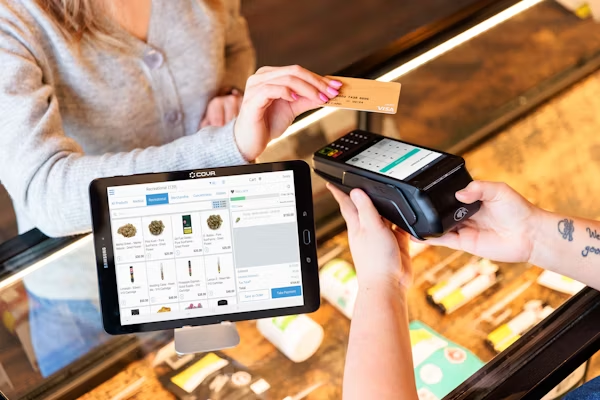
Digital payments in India have transformed rapidly over the last decade, and every major innovation has played a part in shaping the experience consumers enjoy today. Among the early attempts to simplify online transactions was PayZippy, a payment service introduced by Flipkart as a way to make paying online smoother, safer, and more convenient. While it existed only for a short time, its influence helped pave the way for the payment ecosystem we see today.
This article explores the history, purpose, features, working model, advantages, challenges, and impact of PayZippy in an engaging and easy-to-understand way.
Introduction: Why PayZippy Was Ahead of Its Time
Before India embraced UPI apps and instant online payments, customers often hesitated to enter their card details on e-commerce websites. Slow checkout pages, payment failures, and trust issues made online shopping difficult.
This is the environment in which PayZippy first appeared.
Instead of being just another payment gateway, PayZippy aimed to bring speed, reliability, and a comforting sense of safety to digital transactions. Built inside Flipkart’s tech ecosystem, it was designed to solve problems Indian shoppers faced daily—failed payments, slow loading times, and the frustration of typing card numbers again and again.
Even though the service did not continue long term, its vision marked an important chapter in India’s digital commerce journey.
What Is PayZippy?
PayZippy was an online and mobile payment solution introduced by Flipkart to streamline how customers made payments on digital platforms. It functioned as a secure middle layer between the merchant website and the customer’s bank.
It was created to reduce checkout stress, improve transaction speed, and encourage more people in India to trust digital payments.
The Vision Behind PayZippy
The idea was simple—remove every possible inconvenience that prevented a customer from completing an online transaction. Flipkart wanted to create a checkout experience where payment happened smoothly and without confusion.
The service focused on three major goals:
Build trust in online payments
Reduce cart abandonment
Offer a payment option tailored for Indian shoppers
This approach made PayZippy stand out during its time.
How PayZippy Worked
PayZippy integrated directly into the seller’s website or mobile app. When a customer reached the checkout page, PayZippy processed the card details securely and communicated with the bank to complete the payment.
The magic of PayZippy was its saved card feature, which allowed customers to store their details safely, so they didn’t have to type information again during future purchases.
This made checkout feel faster and more effortless compared to traditional gateways available at that time.
Key Features That Made PayZippy Unique
Fast Processing: The system was built to reduce delays and make payments load quickly, even when internet speeds were not stable.
High Security Standards: PayZippy used strong encryption and multi-layer protection, helping users feel comfortable trusting their card information.
Easy Card Saving: Customers could save their frequently used cards for quicker checkouts, which was a fresh and convenient feature back then.
Smooth Mobile Payments: At a time when mobile shopping was growing, PayZippy improved payment speed for smartphone users.
Merchant-Friendly Tools: Businesses were able to access dashboards, track payments easily, and receive better insights into transactions.
Why PayZippy Mattered in India’s Payment Evolution
When PayZippy was launched, India’s digital payment landscape was still evolving. Most consumers were unfamiliar with the idea of storing card details online, and many avoided online shopping due to payment failures.
PayZippy helped shift this mindset by providing:
A simpler checkout experience
More reliable transactions
A sense of comfort while paying online
These improvements encouraged people to explore digital payments without fear, indirectly supporting the growth of India’s e-commerce culture.
Role of Flipkart in PayZippy’s Development
PayZippy was a product of Flipkart’s own technological innovations. Since Flipkart wanted to optimize its checkout process, building an internal solution allowed them to control the quality, speed, and safety of transactions.
Instead of relying completely on third-party gateways, Flipkart created a system that matched the needs of millions of Indian shoppers.
This independent payment solution also helped Flipkart strengthen customer loyalty, as users began to trust the brand’s checkout process more than others.
Customer Experience With PayZippy
People who used PayZippy during its operational period often appreciated:
Reduced checkout time
Fewer payment disruptions
The ability to save card details securely
A cleaner, more user-friendly interface
For many users, PayZippy delivered a smoother shopping experience compared to traditional payment gateways, which were slower and more error-prone.
Merchant Benefits of Using PayZippy
Businesses that integrated PayZippy enjoyed several advantages. Faster checkouts meant fewer abandoned carts, which directly increased sales. Merchants also gained access to better transaction data, helping them understand customer behavior.
The system also offered improved fraud detection and secure payment handling, reducing the risk of financial loss for merchants.
Security Measures and Trust Building
Security was a core part of PayZippy’s design. It relied on advanced encryption methods and strict compliance standards to protect user data. By prioritizing safety, the service helped customers trust online transactions more.
Its multi-layer protection and bank-level security made it one of the safer options during its time.
Challenges Faced by PayZippy
Although PayZippy was innovative, it faced certain challenges:
India’s digital infrastructure was still developing
Many consumers were not comfortable saving card information
Competing payment gateways were gaining traction
Regulatory and operational complexities increased over time
Because of these hurdles, the service eventually discontinued, but its impact remained.
Why PayZippy Was Discontinued
There were several possible reasons behind the discontinuation:
The entrance of more advanced payment solutions
The need for constant updates and costly infrastructure
The shift in customer preference toward wallet-based or UPI-based payments
Even though PayZippy stopped operating, it contributed significantly to Flipkart’s later payment innovations, including advanced checkout systems and integrations with modern platforms.
Impact of PayZippy on Future Payment Innovation
PayZippy’s legacy continues in the Indian fintech space.
The idea of saving cards for quick checkout, focusing on transaction success rates, and simplifying the payment page inspired later services and technologies. Many features that seem normal today were considered breakthrough ideas when PayZippy introduced them.
In many ways, PayZippy was a stepping stone that pushed India closer to the seamless payment systems we enjoy today.
PayZippy’s Place in India’s Digital Payment History
India’s digital payments have come a long way—from slow card gateways to instant UPI transfers. PayZipp’y holds a small but important place in that transformation. It represented an early attempt to create a payment experience designed specifically for Indian users.
Its focus on simplicity, user comfort, and security helped shape how modern payment platforms think about user experience.
What We Can Learn From PayZippy Today
The story of PayZipp’y teaches us that innovation isn’t just about technology—it’s about solving problems people face daily. By understanding user frustration and building solutions around it, PayZipp’y made online payments feel easier.
New-age fintech apps can still learn from its principles:
Keep checkout simple
Prioritize speed
Build trust through security
Understand local user behavior
These values are still relevant today.
Future of Digital Payments in India After PayZippy
While PayZipp’y itself ended, its ideas live on. India now enjoys a vibrant digital payment ecosystem powered by UPI, mobile wallets, QR code systems, and advanced gateways.
The future may include:
Voice-based payments
Biometric authentication
AI-powered fraud detection
Cross-platform universal payments
PayZipp’y was an early spark in this massive transformation.
Conclusion
PayZipp’y may have had a short lifespan, but its contribution to India’s online payment journey is undeniable. It introduced faster, safer, and smarter payment methods when digital commerce was still struggling to gain trust. By focusing on user-friendly design and secure processing, PayZipp’y helped shape the foundation for modern digital payments in India.
Its story remains a reminder that innovation often begins by solving simple, everyday problems—like making checkout easier, faster, and more reliable.
FAQs
1. What was PayZippy?
PayZippy was a payment service built by Flipkart to offer quicker and more secure online card transactions.
2. Why was PayZippy created?
It was developed to simplify checkout and reduce payment failures for Indian customers.
3. Is PayZippy still active?
No, the service was discontinued, but it influenced later payment innovations.
4. Was PayZippy secure?
Yes, it used strong encryption and multi-layer protection to keep card data safe.
5. Could customers save their card details?
Yes, PayZippy allowed users to store cards securely for faster future payments.
6. Why did PayZippy shut down?
It faced regulatory, operational, and competitive challenges as India’s payment landscape evolved.