

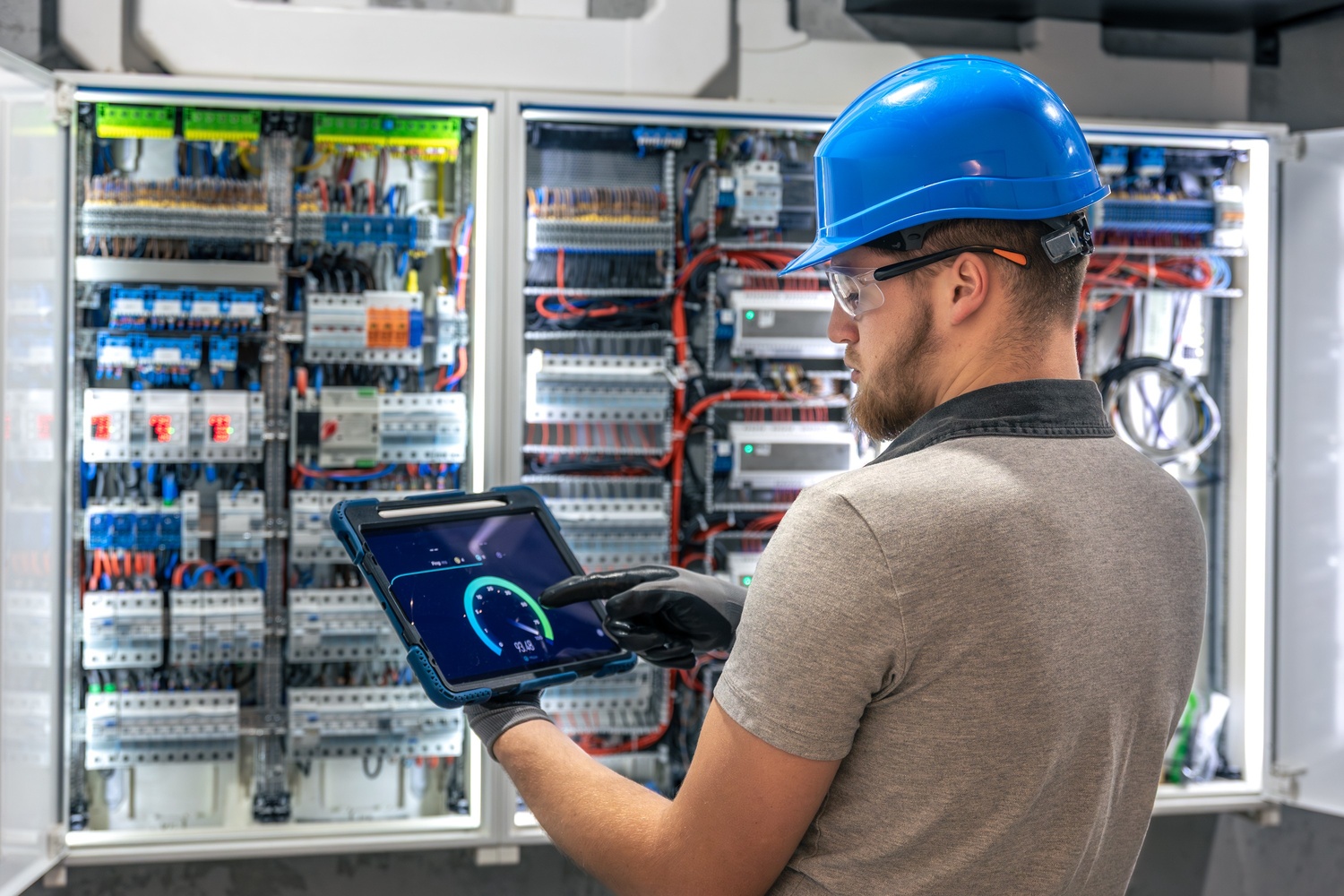
Electricity is so deeply woven into daily life that its orchestration is rarely questioned. Lights turn on, machines hum, servers remain cool, and hospitals function without interruption. Behind this apparent simplicity lies a complex, evolving discipline: power control systems. These systems govern how electrical energy is generated, converted, distributed, and consumed, ensuring that power arrives at the right place, in the right amount, at precisely the right time. In an era defined by electrification, automation, and renewable energy, power control systems are no longer niche engineering tools; they are strategic infrastructure.
Within the first moments of a power surge, a fault, or a sudden spike in demand, control systems react faster than human reflexes. They modulate voltage, regulate current, protect equipment, and maintain stability across networks that span continents. Whether embedded inside a smartphone charger, an industrial motor drive, or a national transmission grid, these systems determine reliability, efficiency, and safety.
Search interest around power control systems often reflects a simple question with far-reaching implications: how is electricity managed so seamlessly in such a complex world? The answer is both technical and human. It involves decades of engineering innovation, regulatory oversight, environmental urgency, and economic pressure. As societies transition toward renewable energy, electric vehicles, and smart cities, power control systems have moved from background components to central actors.
This article explores what power control systems are, how they work, where they are used, and why they matter more now than at any point since the birth of the electrical grid. It traces their evolution, explains their core technologies, and examines their role in shaping a resilient, sustainable energy future.
The Foundations of Power Control Systems
At their core, power control systems are designed to manage electrical power by regulating variables such as voltage, current, frequency, and phase. Their purpose is deceptively simple: deliver usable power safely and efficiently. Achieving that goal, however, requires precise coordination between hardware, software, and feedback mechanisms.
Early power systems relied on mechanical regulators and human operators. As electrical networks expanded in the twentieth century, manual control became insufficient. Automatic control devices emerged, incorporating relays, transformers, and analog controllers. These early systems laid the groundwork for modern power electronics, which use semiconductor devices to manipulate electrical signals at high speed.
A defining characteristic of power control systems is feedback. Sensors measure output conditions and feed that information back to controllers, which adjust inputs accordingly. This closed-loop control allows systems to maintain stability even when conditions change suddenly, such as during equipment start-ups, load fluctuations, or grid disturbances.
Equally important is protection. Power control systems are responsible for isolating faults, preventing overloads, and safeguarding both equipment and people. Circuit breakers, protective relays, and fault detection algorithms are integral components, ensuring that failures are contained rather than catastrophic.
Core Components and Technologies
Modern power control systems are built from several interdependent components, each playing a distinct role.
Power electronics form the physical backbone. Devices such as diodes, thyristors, insulated-gate bipolar transistors (IGBTs), and silicon carbide (SiC) semiconductors enable rapid switching and precise control of power flow. Advances in materials science have dramatically improved efficiency, reduced heat loss, and increased operating voltages.
Controllers provide intelligence. These range from simple proportional-integral-derivative (PID) controllers to advanced digital signal processors and microcontrollers running complex algorithms. In large-scale systems, supervisory control and data acquisition (SCADA) platforms oversee thousands of control points simultaneously.
Sensors and measurement devices translate physical conditions into data. Voltage transformers, current sensors, temperature probes, and frequency meters supply real-time information essential for control decisions. Accuracy and reliability at this stage are critical; faulty data can destabilize entire systems.
Communication networks link components together. Industrial Ethernet, fieldbus protocols, and increasingly wireless technologies allow distributed control elements to operate in coordination. Cybersecurity has become a central concern, as power control systems are now potential targets for digital attacks.
Industrial Applications and Automation
Few environments illustrate the importance of power control systems more clearly than industrial settings. Manufacturing plants rely on precisely controlled motors, heaters, and robotic systems. Even minor fluctuations in power can affect product quality, equipment lifespan, and worker safety.
Motor drives are a cornerstone application. Variable frequency drives (VFDs) adjust motor speed and torque by controlling input power, dramatically improving efficiency compared to constant-speed operation. In sectors such as oil and gas, mining, and water treatment, these systems reduce energy consumption while enhancing process control.
Power control systems also enable automation. Programmable logic controllers (PLCs) coordinate sequences of actions, ensuring that power delivery aligns with production schedules and safety protocols. In highly automated factories, power control is inseparable from operational intelligence.
Reliability is paramount. Industrial downtime can cost millions of dollars per hour. Redundant control architectures, predictive maintenance algorithms, and real-time monitoring are all built upon robust power control frameworks.
Power Control in Energy Generation
Electricity generation, whether from fossil fuels, nuclear reactors, or renewable sources, depends on sophisticated power control systems. These systems regulate output, synchronize generators, and maintain grid stability.
In conventional power plants, control systems manage turbines, boilers, and generators, balancing thermal, mechanical, and electrical variables. Frequency control is especially critical; even slight deviations can propagate across interconnected grids.
Renewable energy introduces new complexities. Solar panels and wind turbines produce variable, intermittent power. Inverters and control systems must adapt rapidly to changing conditions while complying with grid codes. Advanced control strategies, including maximum power point tracking and grid-forming inverters, are essential for integrating renewables at scale.
Energy storage systems, such as lithium-ion batteries, further expand the role of power control. These systems charge and discharge in response to demand, price signals, and grid conditions, acting as both consumers and producers of power.
The Electric Grid and Smart Infrastructure
The electric grid is often described as the largest machine ever built. Power control systems are its nervous system.
Transmission and distribution networks rely on control systems to route electricity, manage congestion, and respond to faults. High-voltage direct current (HVDC) links, controlled entirely by power electronics, enable efficient long-distance transmission and interconnection between asynchronous grids.
The rise of smart grids represents a paradigm shift. Digital control, real-time data, and distributed intelligence allow grids to operate more flexibly and resiliently. Power control systems now interact with millions of endpoints, from rooftop solar installations to electric vehicle chargers.
Demand response programs exemplify this evolution. Control systems adjust power consumption dynamically, reducing peak loads and avoiding costly infrastructure expansion. Consumers, often unknowingly, become active participants in grid control.
Power Control Systems in Everyday Life
Beyond industry and infrastructure, power control systems are embedded in countless consumer devices. Smartphone chargers regulate voltage precisely to protect batteries. Laptop power supplies adapt to varying input conditions worldwide. Household appliances optimize energy use through electronic control.
Electric vehicles are perhaps the most visible consumer-facing application. Onboard power control systems manage battery charging, motor operation, regenerative braking, and thermal regulation. Charging stations themselves are complex control environments, coordinating power delivery, user authentication, and grid interaction.
Even lighting has been transformed. LED drivers use sophisticated control to deliver constant current, ensuring longevity and efficiency while enabling dimming and smart features.
Safety, Standards and Regulation
Because power control systems directly affect safety and reliability, they are subject to rigorous standards and regulations. International bodies such as the International Electrotechnical Commission (IEC) and the Institute of Electrical and Electronics Engineers (IEEE) define technical standards that guide design and operation.
Compliance is not merely bureaucratic. Standards ensure interoperability, reduce risk, and facilitate global trade. In critical infrastructure, regulatory oversight also addresses resilience against natural disasters, equipment failure, and cyber threats.
Functional safety standards, such as IEC 61508, require systematic risk assessment and redundancy. In high-stakes environments like power plants and transportation systems, power control failures can have life-threatening consequences.
Cybersecurity and Modern Risks
As power control system’s become more connected, they face new vulnerabilities. Cyberattacks on energy infrastructure have moved from theoretical threats to documented incidents. Control systems once isolated behind physical barriers are now accessible through networks, sometimes even the internet.
Security strategies must balance accessibility with protection. Encryption, authentication, intrusion detection, and secure firmware updates are now integral to power control design. Human factors, including training and organizational culture, remain equally important.
The challenge is ongoing. As technology evolves, so do attack vectors. Ensuring trust in power control system’s is as much a social and political issue as a technical one.
Innovation and the Future of Power Control
The future of power control system’s is shaped by convergence. Artificial intelligence, machine learning, and advanced analytics are increasingly applied to control strategies. Predictive control can anticipate disturbances before they occur, improving stability and efficiency.
Wide-bandgap semiconductors, such as silicon carbide and gallium nitride, promise higher performance with lower losses. These materials enable smaller, lighter, and more efficient systems, accelerating electrification across transportation and industry.
Decentralization is another defining trend. Instead of centralized control, future systems may rely on networks of autonomous controllers cooperating through algorithms inspired by biology and economics. Such systems could adapt more gracefully to uncertainty and change.
Conclusion
Power control systems are rarely visible, yet their influence is everywhere. They mediate between human intention and physical reality, translating abstract demand into precise electrical action. As societies confront climate change, urbanization, and technological acceleration, these systems have taken on a new significance.
The transition to renewable energy, the electrification of transportation, and the digitalization of infrastructure all depend on reliable, intelligent power control. Failures are no longer localized inconveniences; they can ripple across economies and borders. Success, conversely, enables resilience, sustainability, and innovation.
Understanding power control system’s is therefore not just an engineering exercise. It is a way of understanding how modern civilization functions and how it might evolve. In the quiet regulation of electrons, one can glimpse the future of energy itself: controlled, adaptive, and profoundly human in its intent.
FAQs
What is a power control system?
A power control system regulates electrical energy by controlling voltage, current, frequency, and power flow to ensure safe, efficient operation of equipment and networks.
Where are power control systems used?
They are used in power generation, industrial automation, electric grids, renewable energy systems, consumer electronics, and electric vehicles.
How do power control systems improve energy efficiency?
By adjusting power delivery to match real-time demand, minimizing losses, and optimizing equipment operation through feedback and automation.
Are power control systems part of smart grids?
Yes. Smart grids rely heavily on advanced power control systems for real-time monitoring, demand response, and integration of distributed energy resources.
What are the main risks to power control systems today?
Key risks include cyberattacks, equipment failure, and increasing complexity due to integration of renewables and digital technologies.